
You probably know there’s a new food pyramid. My social feeds are curated to align with my passion for health and wellness, so I know I’m seeing it more than most. But you’d have to be pretty disconnected to not know there’s a new food pyramid and complementing dietary guidelines.
First off, I love all the interest in the new food pyramid! Some of it isn’t positive but, upside, it’s getting people talking more about nutrition, finally. EAT REAL FOOD is the key message coming from it. Finally!
I’m not here to debate the pyramid. Everyone has an opinion and I’m tired of seeing it under fire and being so heavily scrutinized. I don’t want to contribute to that.
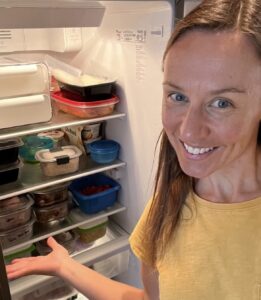
My fridge matches my nutritional focus: lots of real food
So instead, I want to share an opportunity that I’m hoping we will see more of now with the new food pyramid: Curiosity.
Now that all the naysayers and supporters and experts have weighed in, I want to see the new food pyramid and guidelines spark the everyday folks like you and me to be curious, ask questions, and learn about nutrition.
At the end of the day, that’s what this should all really be about – improving our nutrition, improving our health and wellness. And here’s how I see the opportunity to do just that, by getting curious.
How to learn about nutrition
One of the biggest headlines coming from the new food pyramid is red meat being prioritized. Red meat is one of several protein sources listed. It’s not the only one or alone at the top.
But also, there’s a reason red meat is towards the top. Why? I’m glad you asked!
Red meat is packed with nutrition, essential nutrition to boot. In addition to protein and iron, what most people recognize, it’s a great source of magnesium and B vitamins – why do I need B vitamins? I’m glad you asked!
B vitamins maintain your body’s energy production systems and are crucial to metabolic health. They’re also not easy to get from a plant-based diet alone and red meat is a solid source. I don’t even eat read meat, but I respect the nutritional facts.
The headline that’s unfortunately not coming out of the new food pyramid is that veggies are up top. Combine them with fruits and you’d see those 2 powerhouse categories take up more space than anything else on the pyramid. Woo hoo!
Why is this a big deal veggies are at the top…do I really need to eat veggies every day? I’m glad you asked!
Prioritizing a variety of veggies every day is important because they contain SO MANY nutrients. Seriously, tons of good stuff packed in. I could go on forever so I won’t. I’ll note just 2 of the most recognizable here, fiber and carbohydrates. Veggies – and fruit – are wonderful sources of fiber to keep you full and your digestive system happy, with carbohydrates to fuel your brain and body to be great.
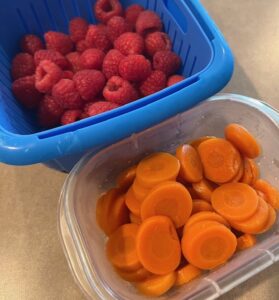
2 favorites for fiber, carbs, and so much more
Wait, carbs? Aren’t carbs bad? Why do we want those high on the pyramid? I’m glad you asked!
Carbs have a bad reputation because people associate them with bread or pasta – foods that aren’t bad but just aren’t exactly nutritional powerhouses.
To make sure I say that again, those foods aren’t bad – no food should be labeled bad – so the new food pyramid may help people see and understand why carbs are really good. Potatoes and carrots, berries and bananas – not just filled with fiber, those are good sources of carbs! And they also deliver a host of nutrients that boost your body, boost your brain, boost your mood, even help you sleep.
Wait, sleep better? What kind of nutrients can help me sleep better? I’m glad you asked!
Be curious, not judgmental
Okay, I’ll stop now – but you see my point, I hope? This new food pyramid could be opening up so many wonderfully curious questions. It could be giving people a great opportunity to learn more about nutrition. The guidelines could really help people improve their health and wellness. And I hope that we get there.
Because, right now, instead of asking questions about why things are included, being curious to look beyond the graphic and actually read the guidelines, most of the online chatter is rooted in political motivations.
Please don’t make health and wellness political. Please don’t shun the guidelines because they came from an administration or a person you don’t like. And please don’t outright lie, try to mislead people with headlines and imagery intended to discredit the value and rich nutritional information baked into all of it.
Let’s be curious, not judgmental. I think a terrific – albeit, fictional – guy once said that 🙂
Guidelines and how they apply to you
A final thought to remember: these are guidelines. They’re not rules, they’re not to be followed as is, exactly for everyone. They’re delivering a starting point, a solid nutritional foundation to personalize for your needs. You don’t HAVE to eat red meat or drink whole milk. There are tons of other foods, nutritional sources, included to choose from, to find what fuels you best.
My needs are different than yours, than other women, than other 40 year olds – yours will be unique, too. But a lot of these basics, these building blocks, are good for everyone, in general terms and in different doses. From there, you decide if you need more fruit and pasta, or if you need more meat and sweet potatoes. And for sure make space for things you love. Dark chocolate is a great treat and source of magnesium. Why do I need magnesium? I’m glad you asked!
Now, go find out what you want to know. Look deeper into the actual guidelines. Find out why they’re different than what’s been out there in the past. See what you might be missing that you hadn’t realized and could make you feel and function better every day.
This is what the new food pyramid can bring that nobody is talking about. So talk. Let this spark a conversation for you to ask questions, learn more, take a deeper interest in what you’re eating. Be curious and, as always, be well!
That’s enough for now. Until next time,
Lindsay